


Circular
Servirio`s News
NEW MARITIME REGULATIONS IN FORCE FROM JANUARY 2026: FOCUS ON SAFETY, SUSTAINABILITY, AND OPERATIONAL OVERSIGHT
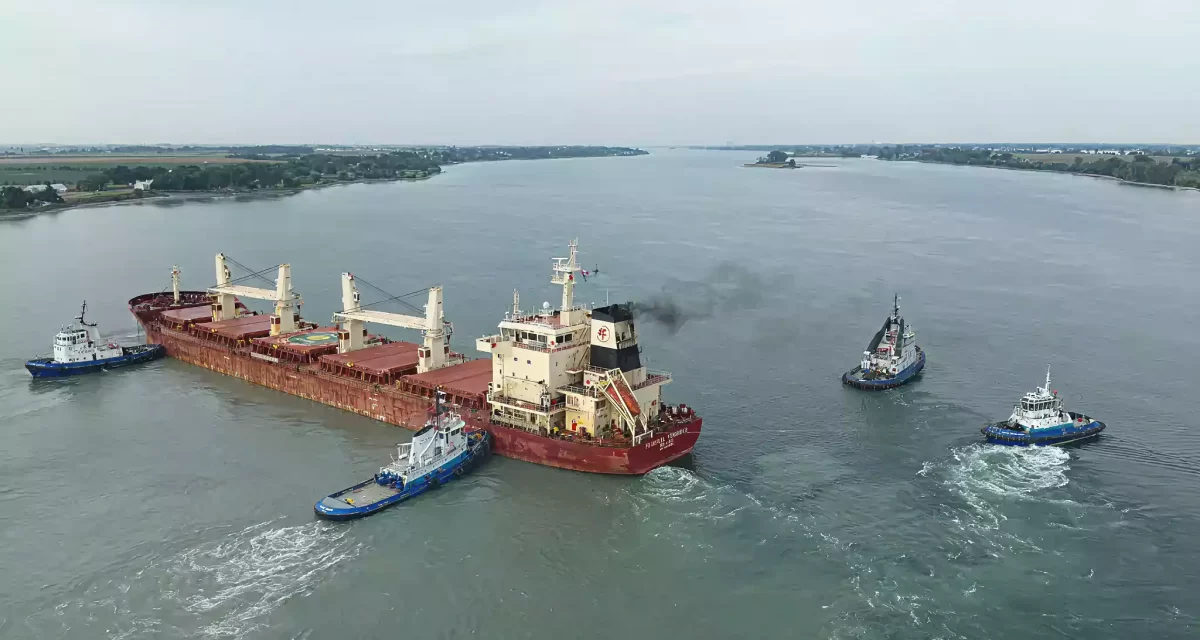
The beginning of 2026 marks a pivotal moment for the global maritime industry, with the enforcement of new regulations promoted by the International Maritime Organization (IMO) and adopted at the national level by the Argentine Coast Guard (Prefectura Naval Argentina – PNA).
These measures directly impact vessels, shipowners, port operators, shipping agents, and the broader logistics chain, raising the bar for operational safety, environmental protection, and traceability.
Mandatory reporting of lost containers at sea
Among the most notable international updates is the mandatory reporting of containers lost at sea. This rule, introduced through amendments to the SOLAS Convention, requires shipmasters and owners to immediately report such incidents, including precise information on location, number of units, and whether hazardous or harmful substances are involved.
The objective is to improve maritime safety, mitigate risks for other vessels, enhance marine environmental protection, and support faster emergency response.
New onboard technology requirements
Starting this year, newly built containerships and bulk carriers of specific sizes must be equipped with electronic inclinometers or equivalent systems.
These instruments monitor vessel motion and provide real-time data to support safer operational decisions, particularly in adverse weather or when handling cargo susceptible to rolling-induced displacement.
Stricter standards for lifting equipment and offshore operations
New safety requirements also apply to lifting devices and systems used in anchor handling and offshore maneuvers.
Operators must ensure stricter identification of equipment, clear certification of Safe Working Load (SWL), regular testing, and accessible documentation for inspection. These measures are especially critical for offshore support, towing, and complex operations, where equipment integrity is vital to crew and facility safety.
Ban on PFOS-based firefighting foams
In line with international environmental commitments, the use of firefighting foams containing PFOS is now banned on vessels subject to SOLAS regulations.
Shipowners are required to replace these agents, update firefighting inventories, and adapt onboard systems under the supervision of relevant authorities.
Local updates: IMDG Code and environmental documentation
At the national level, the Argentine Coast Guard has confirmed the mandatory implementation of Amendment 42/24 to the IMDG Code as of January 1, 2026. This affects the handling of dangerous goods in all aspects: classification, packaging, documentation, stowage, and segregation.
Additionally, under the framework of REGINAVE modernization and a new inspection scheme, the former National Garbage Pollution Prevention Certificate has been replaced by a Declaration of Compliance.
This shift brings greater operational and documentary responsibility to maritime actors, with a renewed focus on the effective execution of environmental management plans.
A year of operational transition
The comprehensive regulatory changes coming into force in 2026 reflect a global trend toward stronger oversight, operational accountability, and traceability, both in maritime safety and environmental protection.
For the maritime and port sectors, the challenge lies in proactively adapting internal procedures, training personnel, and ensuring full compliance to avoid operational disruptions and potential sanctions.
In a landscape of growing regulatory pressure, early alignment with these measures will be essential for competitiveness and reliability in international trade.